Categories
Thinking

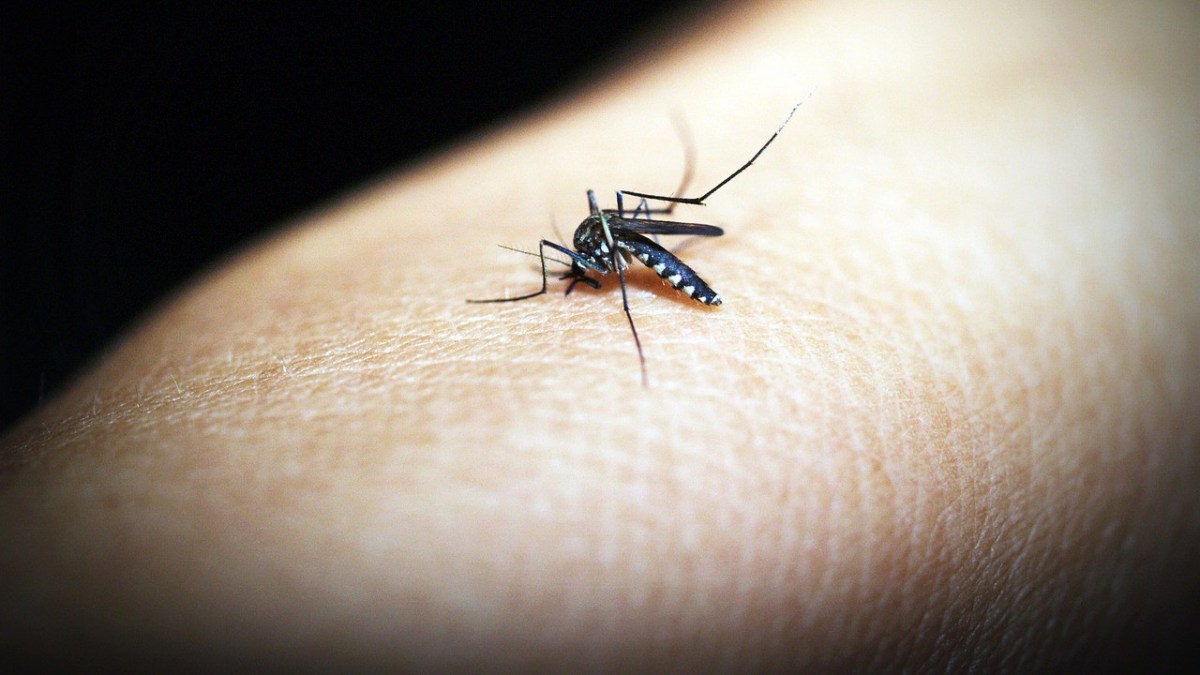
We’ve still not fixed the malaria problem… ðŸ¦Ÿ

… So I’ve donated 10% of my 2025 salary (sorry, a bit belatedly) to some top malaria prevention charities, and some other charities too.

I blog here for my own accountability and in the small hope it might encourage others to do so.

Whenever I waiver about whether this is a good idea, I like to read Julia Wise (normative determinism in full flow). In a recent blog post, she put it very simply:

  • The world has a lot of appalling problems. Many can’t be addressed very well with money, but some can.
  • On a rich-country income [check out how rich you are] you almost surely have some income you could dedicate to making the world better in whatever way seems best to you.
  • This is best done not impulsively and sporadically, but deliberately as part of your ongoing budget.
  • Donating a fraction of your income is a pretty great opportunity to make the world more like what you want it to be: with less suffering, more progress, more fairness, or whatever seems best to you.
  • You don’t have to agree with my choice of where to donate! Think it through yourself!
  • My ask to you for the coming year: think seriously about how much you want to give, and where you want to give it. One tool that I recommend is making a pledge (either for a period of time, or ongoing).

This is all done very easily over Giving What We Can’s platform — where you can select from a range of charities or cause areas. This time I plumped for GiveWell’s Top Charities Fund, which isn’t much different than the GWWC Global Health and Wellbeing Fund that I’d normally give to, but perhaps a bit more cautious.

My donation, which with gift aid, comes up to around £4,000, buys a lot of nets, seasonal chemoprevention, routine childhood vaccinations and vitamin A supplements. In all likelihood, this will save a child’s life. Maybe two.

It’s a drop in the ocean when the USA has withdrawn so much funding for global health (risking 14m deaths over the next five years), but even more vital as a result.

Join me! There’s some helpful info on trying out regular giving here: https://www.givingwhatwecan.org/get-involved/trial-pledge

Categories
Thinking

Donations for global public health in a pandemic year

Since 2014, I’ve donated one-tenth of my salary/income to end poverty. I do so alongside thousands of other folks, having pledged to via Giving What We Can.

Categories
Thinking

New year’s donations (2020)

It’s that time of year again… when we all donate some cash. 

The best thing you could probably do with your life in 2020 is to take the Giving What We Can pledge: to choose to spend 10% of your salary to do the most good you can.

If, like me, you want to be good, but are also lazy, then the people at Effective Altruism (EA) Funds are here to help. You visit their website, play with some sliders as to what you think is most important, donate, and then, voila, they parcel it out to the most effective organisations.

You’re supposed to be public about it, pour encourager les autres. So in the last calendar year I earned £30,000 and am donating £3,000: 95% will go to global health and development organisations (mostly to fight malaria) and 5% to support the work of EA Funds.

If you’re like me, then you also donate to climate charities, cos it’s not clear where that falls in the EA work. I’ve given to 350.org every year for a few years and it seems to have worked pretty well. Last year I also donated several times to support the narrative-flipping, game-changing activism of XR. And I’ve just made a donation to Trees for Life, because their website is beautiful and it seems like planting a few trees is wise* to cover all bases.

*Particularly if you’ve not taken the FlightFree2020 pledge. Which you should.

Until next year! (Unless we’ve solved poverty and inequality by then… Or Jeff Bezos has finally stepped up)

Categories
Thinking

New year’s donations

In 2013, I took the Giving What We Can pledge.

It states that I’ll give 10% of my income to effective charities working to reduce global poverty.

As a result, for 2014, 2015, and 2016, I’ve given £3,300, £3,500, £1,605. This represents:

  • 717 long-lasting insecticidal mosquito nets distributed via the Against Malaria Foundation;
  • 3,023 neglected tropical disease treatments provided by the Schistosomiasis Control Initiative;
  • 4,762 neglected tropical disease treatments provided by Deworm the World; and
  • an unspecified amount of micronutrients given to kids via Project Healthy Children.

So, the theory goes, I’ve saved the lives of a few children. Hurray!

I earned £27,300 in 2017, so I’m about to donate another £2,730.

Categories
Thinking

How to do more good this year

It’s about this time of year that in a moderately hungover fashion, I cast my mind back and ponder what I have achieved in the last 12 months.

In my day job and as a volunteer, I work at trying to increase public participation in governance.

And I do ultimately think that a more democratic system of governance – across political deliberation, decision making and across public services, coupled with citizenship education and better informed citizens – is the kind of systemic change required to solve the big problems.

However…

I’m aware that this systemic shift might take a while.

In the meantime, it makes me happy to think that each of us still has the capacity to be extremely effective in making the world a better place. That is, increasing the net wellbeing of everyone on the planet.

There are now nearly 1,500 members of Giving What We Can, the network of folks who donate a significant proportion of their salary to do as much good as they can. This is typically realised as donations to low-cost high-impact health interventions. So far, the membership has donated $10m, and is projected to give $500m over members’ lifetimes.

For me, in 2015, I earned £35,000 (before tax). I’m donating £3,500 to their trust, which in turn passes the money to four charities:

  • Against Malaria Foundation
  • Schistosomiasis Control Initiative
  • Deworm the World
  • Project Healthy Children

According to the number-crunchers this should be enough to:

  • distribute 600+ bed nets to prevent malaria; or
  • 3,000+ deworming treatments

…the equivalent to saving at least one life this year.

That’s a Happy New Year.

Learn more (and even try it out) here.

P.S. I’ve also tried to offset my carbon footprint separately with the great Cool Earth and 350.org.

(Photo credit: BY-NC-ND 2.0 Paul Brock Photography)

Categories
Reviewing

One resolution fulfilled: my 2014 charitable giving

Exactly one year ago, I took the Giving What We Can pledge. It’s a commitment to contribute 10% of my salary to the most effective efforts to end global poverty.

This post details what I’ve done about it and hopefully encourages others to join the fun. 

Categories
Thinking

The Magic of King Bill: the global power of the Bill and Melinda Gates Foundation

My term paper for my global health governance course looks at the power of the Gates Foundation. ‘King Bill’ because Gates is the most powerful man in global health and is accountable to nobody but himself. ‘Magic’ because it focuses on breakthrough ‘magic bullet’ technical solutions.

As global philanthropic funds rise, see, e.g. the Billionaire’s Giving Club, understanding the power of organisations like Gates’ becomes increasingly important for maintaining an accurate picture of global governance.

The argument goes like this:Â